 Inside High School Sports DFW
 Inside High School Sports Houston
 Sports Stars of Tomorrow
 She's in the Game

GameDay Network

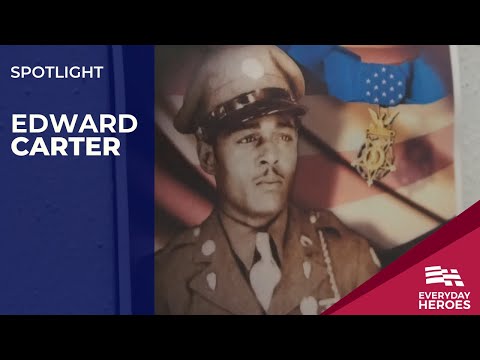
Sgt. Edward Carter Jr.: The WWII Hero Who Fought Wounded and Alone
October 23, 2026
Wounded five times in a solo advance, Sgt. Edward Carter Jr. captured two enemy soldiers and delivered vital intelligence—yet waited 52 years for the Medal of Honor.
By March 1945, the war in Europe was entering its final, grinding months. For soldiers of the 12th Armored Division pushing through Germany, every advance carried the risk of sudden, lethal contact with the enemy. It was in that environment that Army Sergeant Edward Alan Carter Jr. performed one of the most remarkable acts of individual valor the war would produce—and then waited more than fifty years for the country to formally recognize it.
Carter's path to that moment was unlike almost any other soldier's. Born in Los Angeles, he grew up abroad as the son of a missionary, spending formative years in China. By the age of fifteen, he had already seen combat, fighting alongside the Chinese Nationalist Army and later in Spain. When he finally enlisted in the U.S. Army, the military's racial policies initially confined him to a truck driver's role in England. That changed in 1944, when General Eisenhower opened infantry service to Black soldiers. Carter joined the 56th Armored Infantry Battalion and eventually served with the 12th Armored Division—the unit's only Medal of Honor recipient.
On the day in question, Carter was riding atop a tank when enemy fire forced his unit to a halt. He volunteered to lead a small reconnaissance group toward a warehouse where the fire appeared to be originating. Two of his men were killed during the advance and one was wounded. Carter himself had already been hit, but he ordered the surviving soldier back to seek medical attention and pressed forward alone. He was struck four more times.
Eight German soldiers then moved to capture him. Carter killed six and took the remaining two prisoner. Using the captured men as cover, he made his way back to American lines. The intelligence those prisoners provided—details on enemy troop movements and supply lines—proved valuable to the unit's continued advance.
Carter and six other African American soldiers were awarded the Medal of Honor in 1997, following a commissioned study that found systemic racial bias had prevented their recognition after the war. They remain the first and only Black Americans to receive the Medal of Honor for service in World War Two.
Related Videos